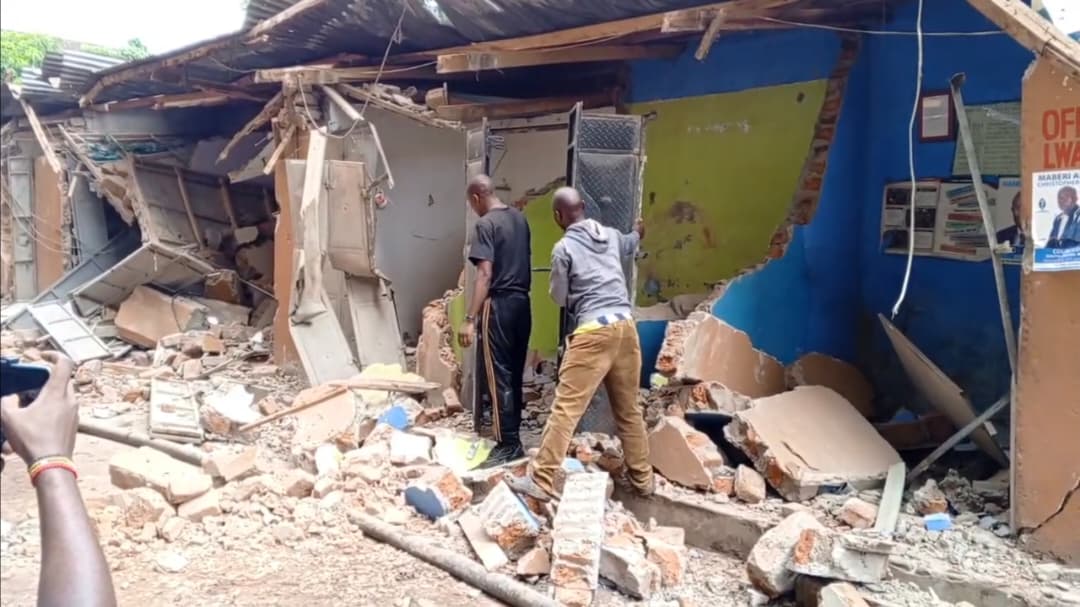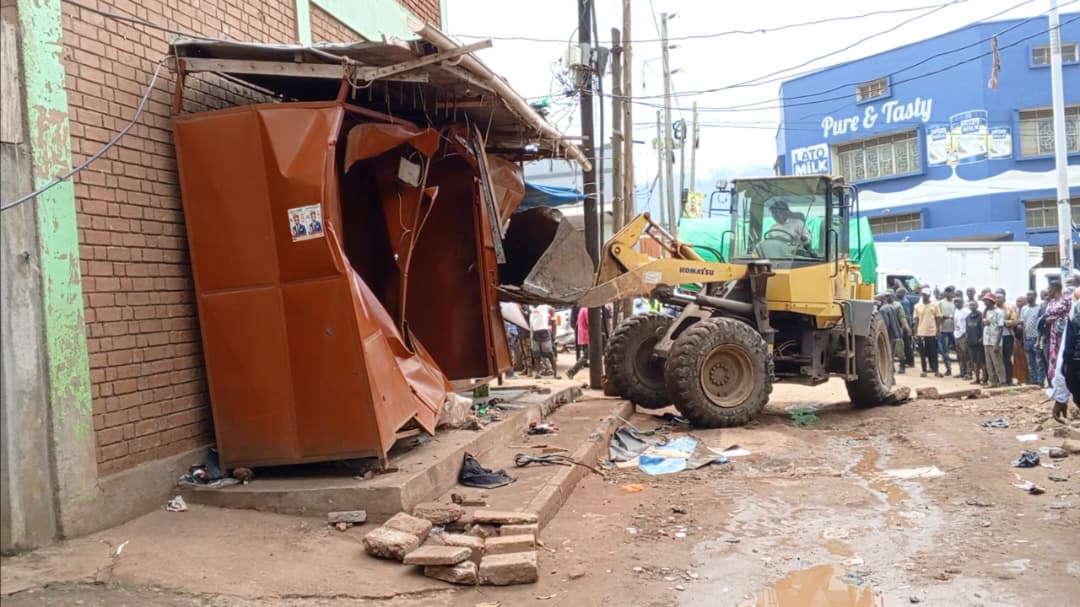
Street vendors in Mbale City are counting losses after authorities intensified a trade order enforcement operation that saw makeshift structures demolished and informal traders evicted from the Central Business District.
The joint operation, supported by the Uganda Police Force and the Uganda People's Defence Forces, is aimed at decongesting walkways and restoring order in the city.
Offenders had earlier been given a five-day ultimatum ending Sunday to vacate the streets voluntarily. When the deadline elapsed, enforcement teams moved in on Monday morning, clearing vendors from several hotspots.
City officials say the operation targets illegal street vending and structures that block pedestrian access while undermining licensed traders who pay rent and taxes.
Formal businesses that had extended merchandise onto pavements were also directed to remove displays and confine operations within their shops.
One of the hardest-hit areas was Bachelor’s Street, a narrow sanitary lane linking Republic Street and Naboa Road.
The street is known for round-the-clock food vending — snacks during the day and local dishes at night — and is popular among residents who rely on it for affordable meals. Following the operation, pavements that previously hosted dozens of stalls were left bare.
On Tuesday, enforcement teams extended the exercise to Lorry Park, the Taxi Park, the Bus Park, and areas surrounding Mbale Central Market and Kikindu Market, where makeshift stalls were flattened to pave the way for organised trading.
The crackdown has drawn mixed reactions. Some residents welcomed the move as long overdue, citing congestion and disorder in the city centre. Others expressed concern over the abrupt displacement of small-scale traders.
“It is good because the walkways were impassable. We had to divert to the road, risking accidents as goods dominated the streets,” said Hussein Walukuli, a taxi driver operating in the city.
Several affected vendors criticised political leaders for what they described as a failure to protect their interests.
“President Museveni, it is barely two months since we elected you, but we have no peace. We are not rejoicing,” one vendor said.
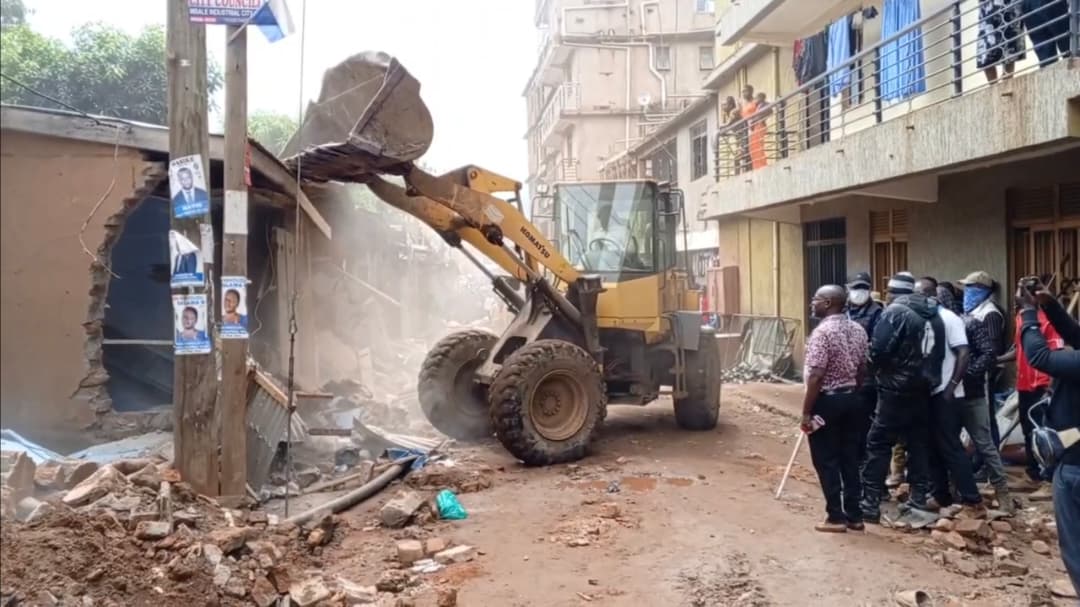
Others questioned where they would relocate after investing funds from the government’s Parish Development Model programme into their businesses.
City Town Clerk Abirebe Assy Tumwesigire defended the operation, saying it is intended to restore order rather than punish livelihoods.
“The city has space for everyone. Formal traders operate from shops and meet licensing obligations, while informal traders are expected to operate from designated markets,” she said.
Industrial Division Deputy City Commissioner Amza Banja said the exercise also seeks to curb crime. “Some criminals hide under the guise of street vending,” he noted.
Authorities further argue that street vending contributes significantly to waste accumulation in the city centre.
Geoffrey Mugisa, who heads the operation, urged displaced traders to relocate to gazetted markets, particularly Kumi Road Market, which he said remains largely unoccupied.
As the two-week enforcement exercise continues, tensions remain high between city authorities and vendors, highlighting the ongoing challenge of balancing urban order with livelihoods in Mbale’s rapidly growing city centre.